
Correcting online misinformation
In this case study, HM Revenue and Customs (HMRC) demonstrate how the ‘Respond’ and ‘Monitor’ steps of our PRIME framework can be used when issuing rapid-response alerts to correct misleading tax advice in AI search outputs.
Read our guidance on strengthening public trust in the age of AI-powered search to learn more.
The challenge
Online search tools and AI summaries began returning incorrect tax advice to the public, including incorrect information on VAT deadlines. HMRC identified that its own citations were often missing from AI responses, or were wrongly attributed when they did appear, and results varied depending on the user and platform. This highlighted a rapid growth of tax mis, dis and malinformation online.
Erroneous content spread quickly across platforms such as Google, Bing and ChatGPT, with other AI systems amplifying false advice. This risked reputational damage and customer harm, and became a catalyst for a wider effort to tackle mis, dis and malinformation.
What they did
HMRC traced the issue to incorrect information on a tax agent website, which had been copied by other agents and fed into social media, search results and AI agents. Their digital communications colleagues worked with legal and policy teams to issue an update for tax agents with accurate information.
HMRC also added a ‘call-out’ box to the relevant GOV.UK guidance page, designed to send stronger signals to large language models about the correct source. HMRC then created and implemented its first ‘HMRC Verified’ alert, using a purpose-built template to highlight the correct information.
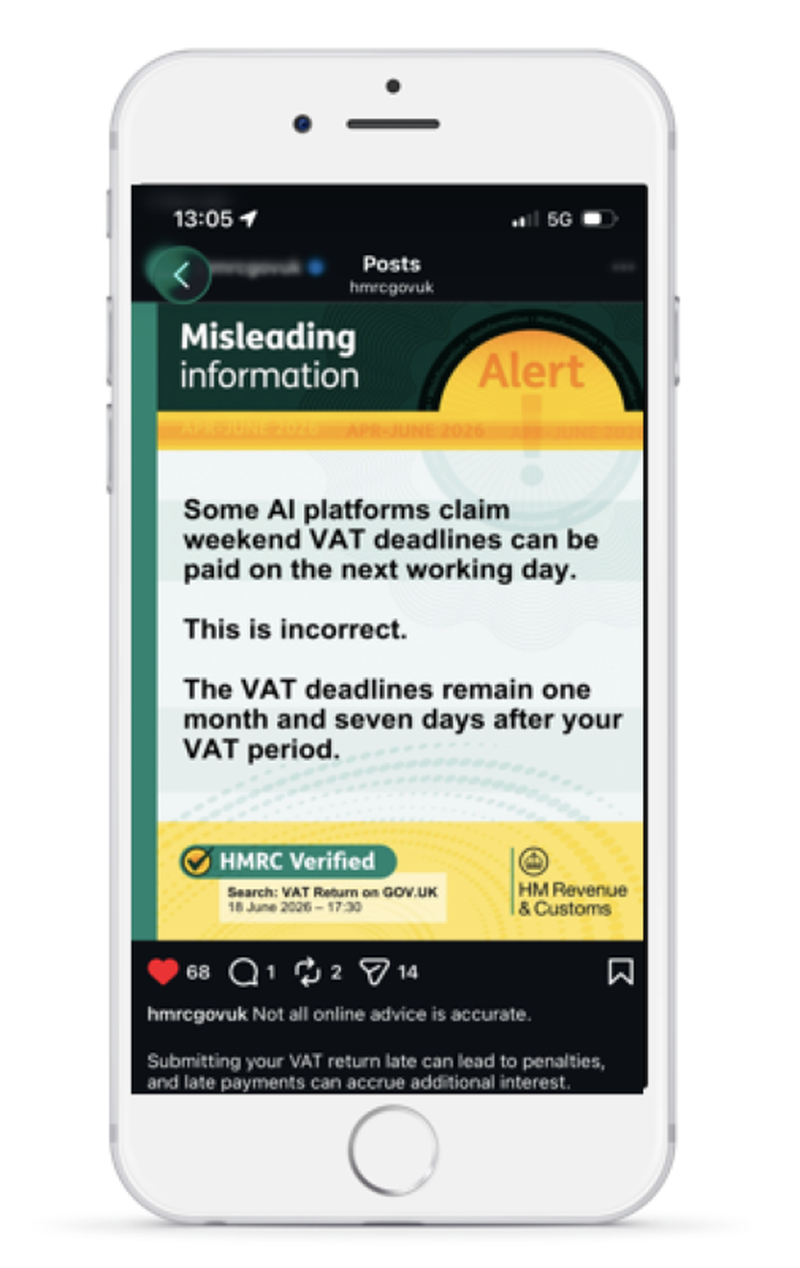
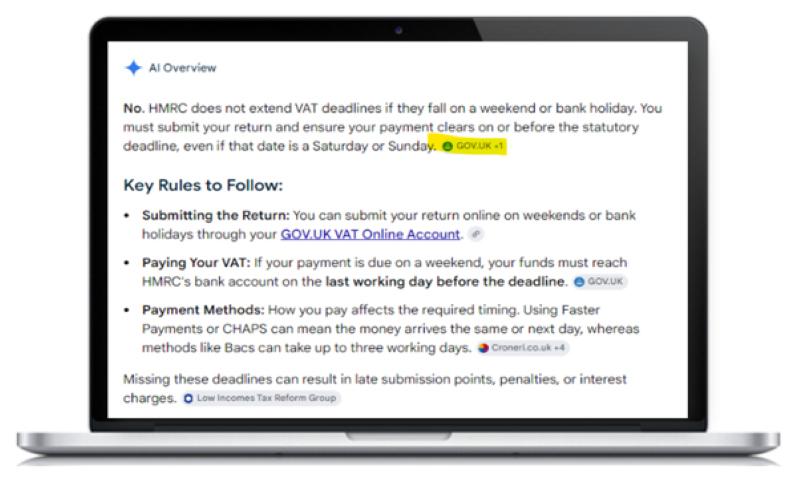
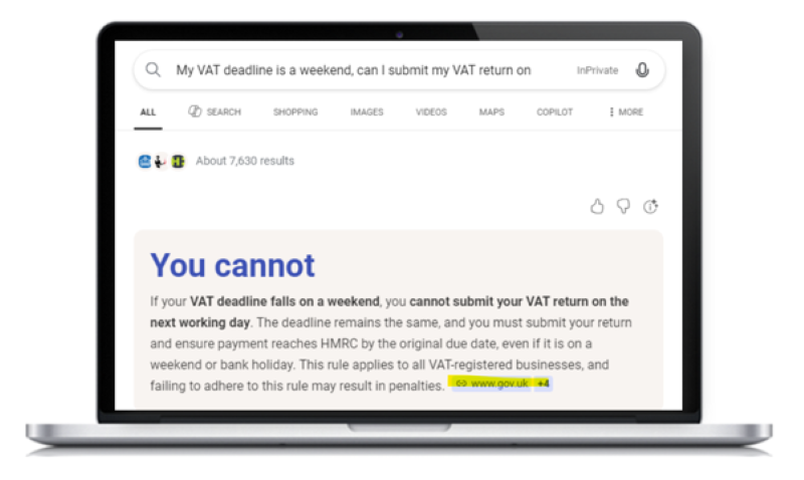
‘HMRC Verified’ is a bespoke, rapid response alert system, the first of its kind in government communications. The alert is built to respond to emerging misinformation and misleading content within approximately an hour of it being published. Each alert uses a secure visual template with a distinctive label and watermark-style security features, so the public can trust that it comes from an official HMRC account.
The alert system relies on internal social listening and agentic AI intelligence tools. It also works alongside flagship campaigns as a tool for pre-emptive rebuttal and wider public awareness.
The outcome
It took only days to re-index the information in AI summaries. HMRC worked with Google to make sure their search results updated quickly and cited the HMRC guidance page first in most responses. Google’s AI mode showed similar improvement, though it did not always rank the HMRC guidance page first within its summary. Bing was initially more resistant, continuing to favour other sources until the alert was issued.
AI agents and apps such as Grok, Claude and ChatGPT quickly followed, actively highlighting the corrected information. DeepSeek even included its own ‘Critical Warning’ about the issue.
This showed how proactive intervention, in the right places with the right content, can shape the wider information ecosystem and counter harmful content quickly. It also demonstrated how fragmented online customer journeys have become. Audiences move constantly between search, AI tools, apps and social channels, and conflicting sources erode trust.
Next steps
HMRC is developing a community engagement model. This model will involve managers working as trusted digital ambassadors who engage directly with content posted in forums and social communities. Acting as a digital equivalent to HMRC’s broadcast spokespeople, they will help correct misinformation and build trust in real time, alongside education formats designed to prevent non-compliance before it happens.
HMRC is also scoping a more advanced, AI-augmented rapid response system, intended to scale the success of HMRC Verified rather than replace human judgement. A multi-tier system will monitor digital channels for HMRC-related claims, verify them against GOV.UK guidance, classify their urgency and draft a response, before handing everything to a human for sign-off. Nothing will be published automatically or without human oversight.