
Background
In 2022, the Government Communication Service (GCS) team conducted a thorough brand-safety assessment of WeAre8, using the former SAFE principles (‘Safety and suitability’, ‘Advertising context’, ‘Freedom of speech’ and ‘Ethics and enforcement’).
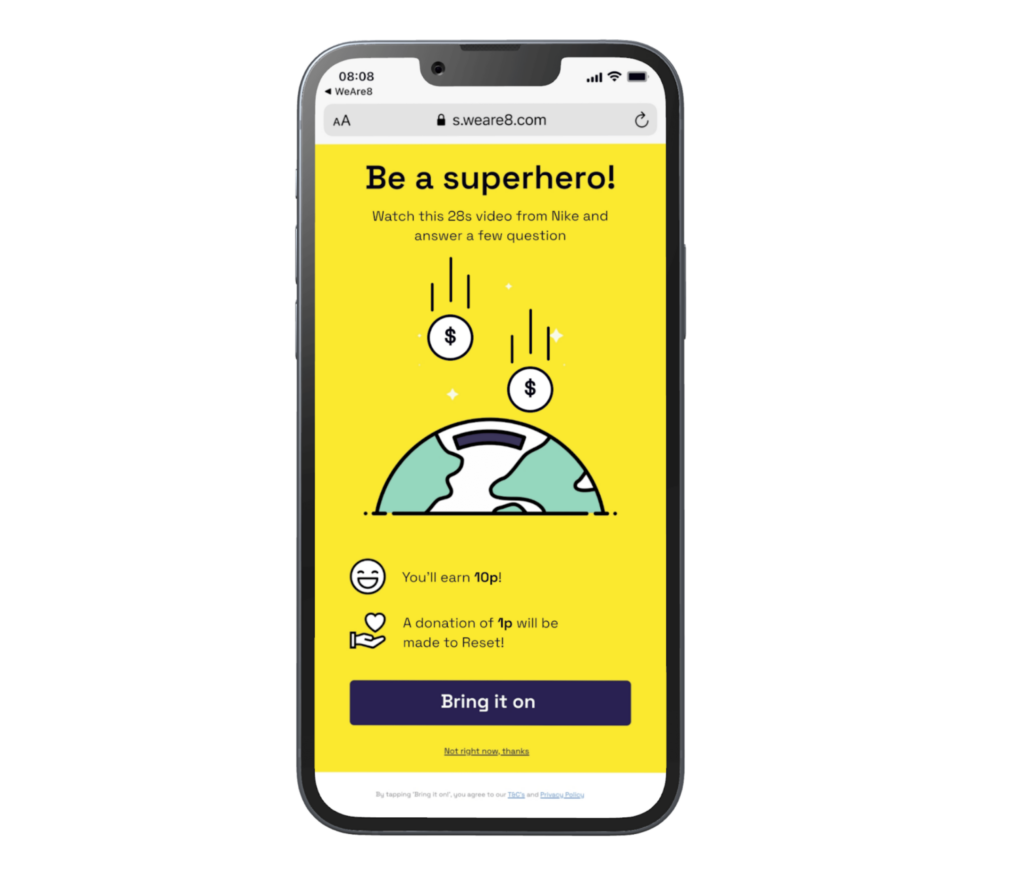
WeAre8 is a social media platform with a distinctive advertising model that shares revenue with users and charitable causes.
This case study demonstrates how the new SAFER framework can identify platforms that meet stringent government requirements whilst offering innovative solutions to traditional digital advertising challenges.
The challenge
WeAre8 presented a unique proposition with its revenue-sharing model and limited daily advertisement exposure of just 2 minutes per user. GCS needed to evaluate whether this unconventional approach could deliver effective, safe advertising whilst maintaining the high standards set out in the framework.
The brand safety assessment process
The comprehensive evaluation examined WeAre8 across the framework’s former four principles (‘Safety and suitability’, ‘Advertising context’, ‘Freedom of speech’ and ‘Ethics and enforcement’), with particular focus on how the platform’s distinctive funding model aligned with government requirements for safety, accountability and effectiveness.
Each criterion was scored based on likelihood and impact of risk occurring, with combined scores determining overall risk levels.
The assessment highlighted:
- Advertising context and engagement: WeAre8’s model of paying users to watch advertisements, combined with the 2-minute daily limit, could potentially deliver higher attention levels and engagement rates. The opt-in nature of advertisement-viewing meant government messages would reach genuinely engaged audiences, minimising the risk of advertisements competing for attention within cluttered feeds.
- Ethics and accountability: WeAre8’s PricewaterhouseCoopers (PWC) audit and transparent reporting through SAM-i provided government communicators with clear visibility of advertisement placement and performance, addressing critical accountability requirements. The platform’s commitment to revenue-sharing and supporting charitable causes aligned with government values around responsible digital engagement and social impact.
The results
At the time of assessment, the platform presented a low-risk environment suitable to host government communications advertising and was added to the Inclusion List (a list of digital environments that adhere to all brand safety principles of the SAFER framework, maintained by the government’s lead media agency).
The platform’s unique funding model, which shares advertising revenue with users and charitable causes, demonstrated that innovative business models can create safe, accountable environments for government communications whilst maintaining effectiveness in reaching target audiences.
The learnings
This assessment illustrated how thorough evaluation using the framework principles can identify platforms that not only meet brand-safety requirements but also offer innovative approaches to traditional digital advertising challenges, enabling government communicators to explore new opportunities whilst maintaining rigorous standards.